Alright, let's talk concrete patios. I've been pouring them around Kingsford for years, and I hear the same questions pop up time and again. It makes sense; you're investing in your home, and you want to get it right. So, I figured I'd lay out the straight answers to what folks usually ask me. No fluff, just what you need to know.
How long does a concrete patio actually last in our Michigan weather?
This is probably the number one question I get, and it's a good one, especially with our winters. A properly installed concrete patio, done right from the start, should easily last you 20 to 30 years. I've seen some go even longer. The key here is 'properly installed.' That means good sub-base preparation – compacting the soil, adding a gravel layer, making sure it drains right. It also means using the right concrete mix for our climate, one that can handle freeze-thaw cycles. If someone cuts corners on the prep or uses a cheap mix, you'll see cracks and spalling a lot sooner, usually within 5-10 years. It's an investment, so don't skimp on the foundation.
What's the deal with cracking? Is it inevitable?
Look, concrete cracks. It's a fact of life with the material. It expands and contracts with temperature changes, and it shrinks a bit as it cures. But 'inevitable' doesn't mean 'uncontrolled.' My job, and any good concrete contractor's job, is to control where those cracks happen. We do this with control joints – those lines you see cut into the concrete. They're not just for looks; they're stress relief points. We plan them out based on the patio's size and shape. If those joints are placed correctly and deep enough, any cracking will happen along those lines, keeping your patio looking good and structurally sound. If you see random, spiderweb cracks all over, that's usually a sign of poor installation or an issue with the sub-base.
How important is drainage for a patio?
Extremely important. Seriously, don't overlook this. Water is concrete's enemy if it's sitting on it or getting underneath it. We always make sure the patio has a slight slope, usually about 1/8 to 1/4 inch per foot, directing water away from your house's foundation and any other structures. If water pools on your patio, it can lead to staining, moss growth, and in winter, repeated freeze-thaw cycles can really damage the surface. If water gets under the slab and freezes, it can cause 'heaving' – lifting the concrete – which leads to major cracks. Good drainage protects your patio and your home.
Can I really customize the look, or is it just plain grey?
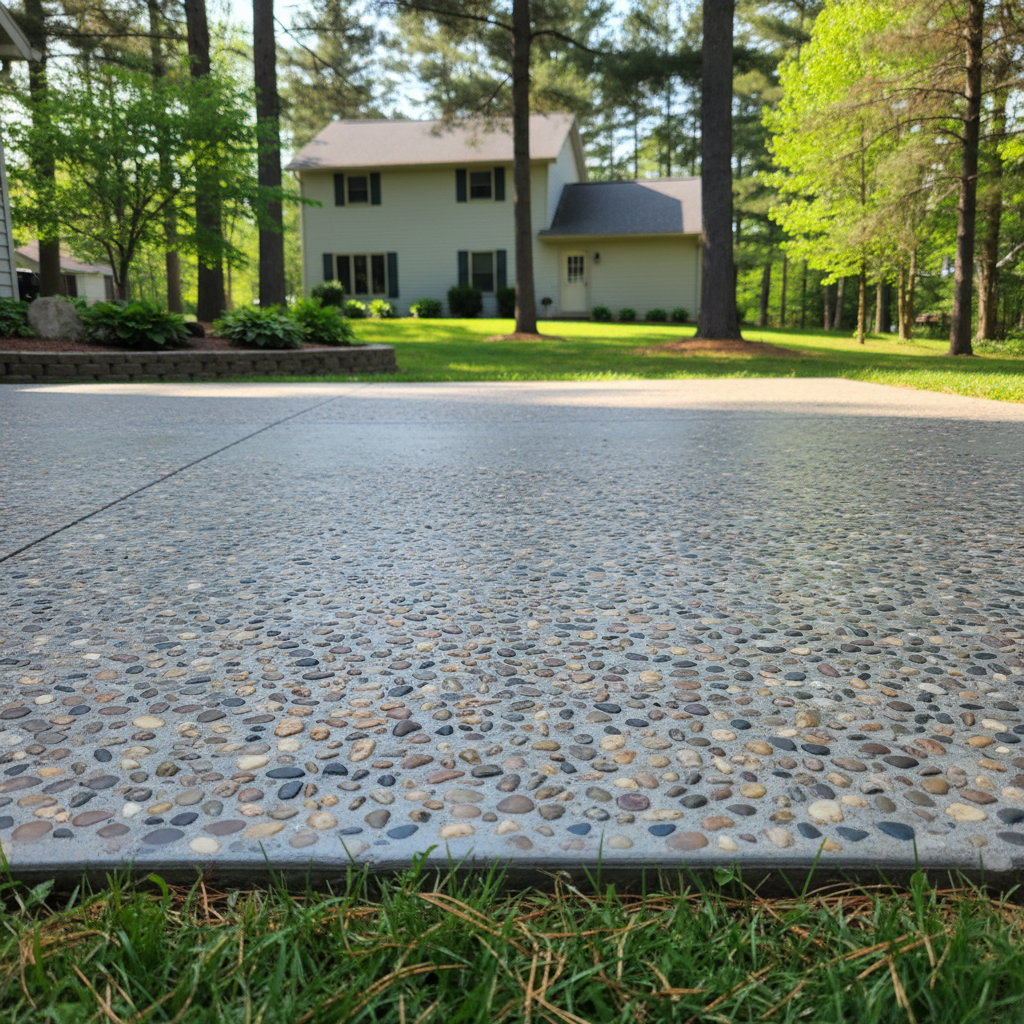
Oh, you've got way more options than just plain grey! That's where things get fun. We do a lot of stamped concrete around here. You can get patterns that mimic natural stone, brick, wood planks – you name it. There are also different colors we can mix into the concrete or apply to the surface. Acid stains give a really unique, mottled look. Then there's exposed aggregate, which shows off the small stones in the mix for a textured finish. You can even combine techniques. So, whether you want something rustic to match your cabin up north or a sleek, modern look for your Kingsford home, we can usually make it happen. It's not just a slab; it's an extension of your living space.
What kind of maintenance does a concrete patio need?
Compared to a wood deck, concrete patios are pretty low maintenance, which is a big plus for busy folks. The main thing is to keep it clean. A good sweep to remove leaves and dirt, and an occasional wash with a hose and a mild detergent will do wonders. For tougher stains, a pressure washer on a low setting can work, but be careful not to damage the surface, especially with stamped or colored concrete. I always recommend sealing your patio every 2-3 years. A good quality sealer protects against stains, UV damage, and helps it stand up to our harsh winters. It's like sunscreen for your concrete.
How long does the installation process usually take?
That depends on the size and complexity of the patio, but generally, for a standard residential patio, we're looking at a few days of actual work. Day one might be prep – excavation, grading, setting forms. Day two could be pouring and finishing the concrete. Then, if it's stamped or colored, there might be another day for sealing and control joint cutting. After the pour, the concrete needs time to cure. You can usually walk on it after 24-48 hours, but you'll want to keep heavy furniture or vehicles off it for at least 7 days, and ideally, let it fully cure for 28 days before putting it through its paces. We'll give you a clear timeline when we look at your specific project. Premium Concrete Co. always aims for efficient, quality work.
What's the best time of year to install a concrete patio in Kingsford?
Here in Kingsford, the sweet spot for pouring concrete is typically spring, summer, and early fall. We need temperatures to be consistently above freezing, ideally between 40-70 degrees Fahrenheit, for the concrete to cure properly. Pouring in the dead of winter is a no-go; the cold can severely weaken the concrete. Late spring and early summer are great because the ground has thawed, and we usually have stable temperatures. Fall can work too, but you have to watch out for those early freezes. If you're thinking about a patio, it's never too early to get a quote and get on the schedule, especially for those prime summer dates.
```