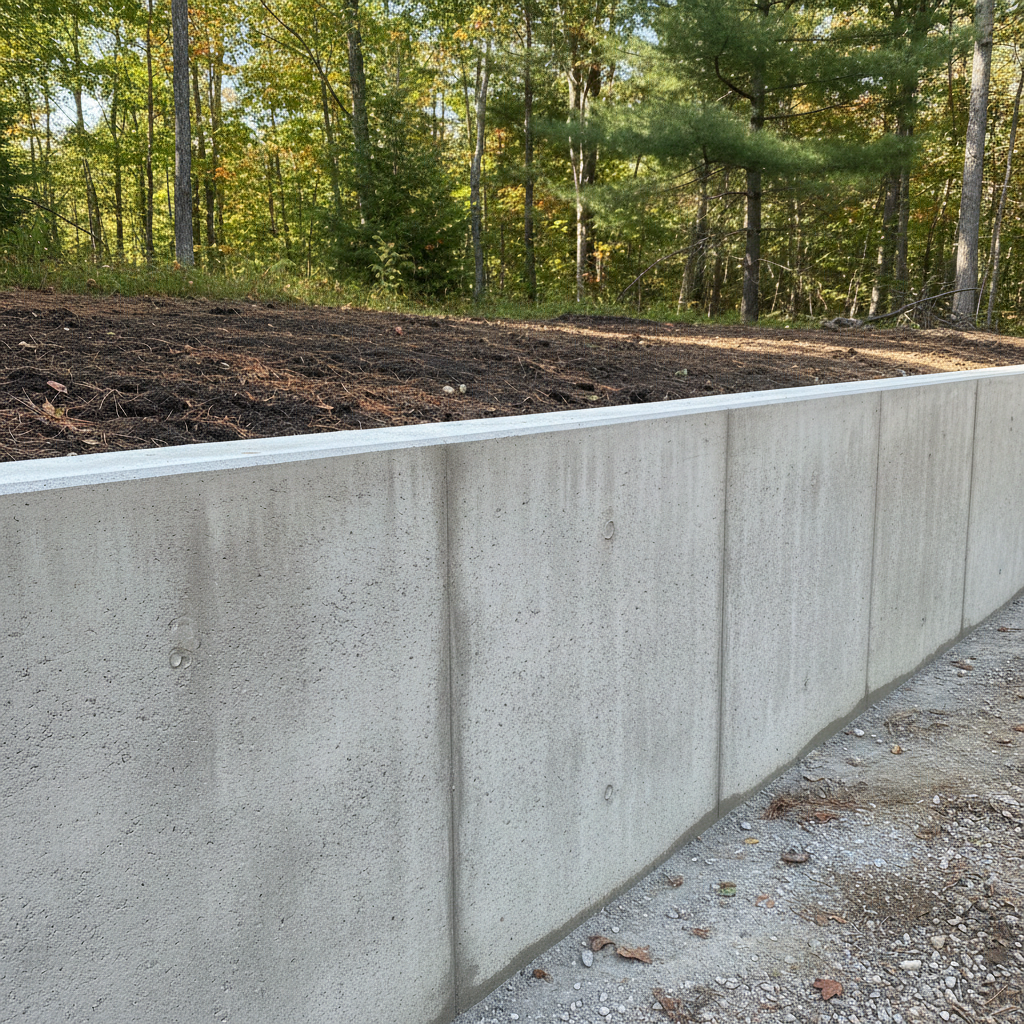
Alright, let's talk retaining walls. I get a lot of questions about these, especially with some of the hilly properties we've got around Kingsford. Or maybe it's just a sloped yard that needs some definition. People often think they're just for holding back dirt, and while that's their main job, there's a lot more to it. Here are some of the most common questions I hear, and my honest answers.
What's the real difference between a segmental block wall and a poured concrete wall?
This is a big one, and it really comes down to engineering and how you want it to look. Segmental block walls, often called 'SRWs,' are built from individual, interlocking concrete blocks. They're dry-stacked, meaning no mortar, and they rely on their own weight, how they interlock, and usually some geogrid reinforcement to hold the soil. Since they're flexible, they can handle minor ground movement better than a rigid structure. Plus, they come in a ton of styles and colors, so you can really match them to your home.
Poured concrete walls, on the other hand, are exactly what they sound like: we pour concrete into forms right on site. These are monolithic structures, meaning they're one solid piece. They're incredibly strong and durable. For really tall walls, or walls supporting heavy loads like a driveway or even a building, poured concrete is often the best choice. You can face them with stone or stucco, or even stamp them to look like other materials, but the initial look is typically a smooth, gray finish. You'll usually see these where serious structural integrity isn't just nice to have, it's absolutely necessary. Both types have their place, but they're built differently and perform differently, you know?
How important is drainage behind a retaining wall, really?
Crucial. Absolutely, 100% vital. If you don't manage the water behind your retaining wall, you're just asking for trouble. Water is heavy, and hydrostatic pressure — that's the pressure water exerts — can be immense. It's strong enough to push over even well-built walls over time. Think about the heavy snowmelt we get here in the U.P., or those spring downpours. All that water has to go somewhere.
We always put in a solid drainage system. This usually means a layer of gravel directly behind the wall, a perforated drain pipe at the base of that gravel, and filter fabric to keep soil from clogging everything up. The pipe then routes the water away from the wall, often to a daylight drain or a storm sewer. Without proper drainage, you'll see bowing, cracking, or even total failure of the wall. It’s not an optional extra; it’s part of the wall's structural integrity.
What kind of permits do I need for a retaining wall in Kingsford?
This isn't a one-size-fits-all answer, but generally, if your retaining wall is over a certain height, you'll need a permit from the city or county. In Kingsford, it's typically walls over 4 feet tall that trigger permit requirements, but it's always best to check with the Kingsford Building Department directly before starting any project. They'll want to see plans, often stamped by a professional engineer, especially for taller or more complex walls. This isn't just bureaucracy; it's about making sure the wall is designed safely and won't fail, potentially causing damage or injury. Don't skip this step; it can save you a lot of headaches and fines down the road.
Can a concrete retaining wall increase my property value?
Definitely. A well-designed and properly installed concrete retaining wall can absolutely boost your property value. It's not just about aesthetics, though a nice-looking wall certainly helps curb appeal. It's about functionality. If you've got a sloped yard that's unusable, a retaining wall can create flat, usable space for a patio, garden, or play area. It can prevent erosion, which protects your landscaping and even your home's foundation. It shows that the property has been well-maintained and improved. It's an investment in the usability and longevity of your outdoor space, and buyers appreciate that.
How long do concrete retaining walls last in our Kingsford climate?
A properly built concrete retaining wall, whether it's poured or segmental block, should last for decades here in Kingsford. We're talking 50 to 100 years, easily. The key is that