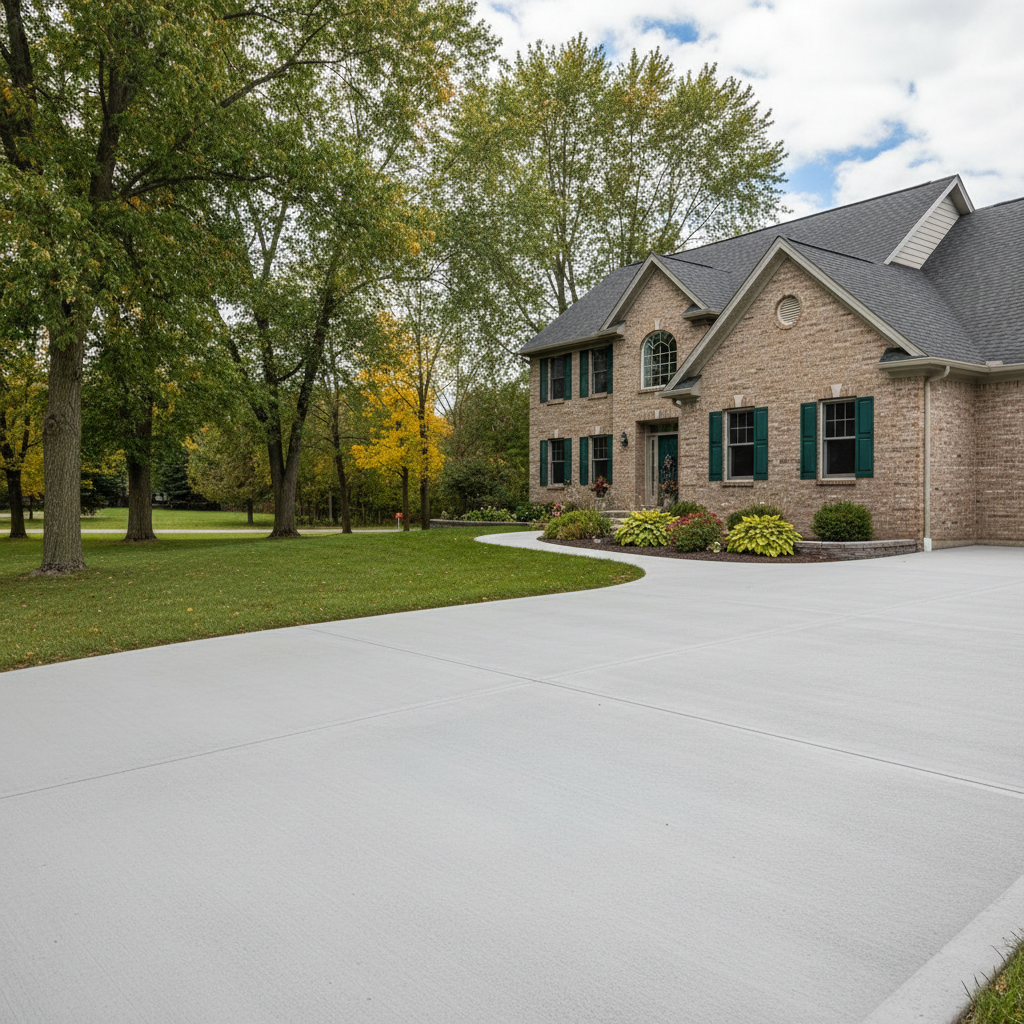
You've got concrete around your Kingsford home, right? Maybe it's a driveway, a sidewalk, or that new patio we poured for you last year. Whatever it is, you want it to last. And it can, but it needs a little help from you. I've been working with concrete here in the U.P. for a long time, and I've seen what works and what doesn't.
Making Your Concrete Last: The Basics
Let's be honest, concrete is tough, but it's not indestructible. Especially with our Michigan winters, you know? The biggest enemy to concrete up here? Water, and that brutal freeze-thaw cycle. When water gets into tiny cracks, freezes, expands, and then thaws, it slowly breaks the concrete apart. We call it spalling, and it's a real pain.
So, the first thing you need to do is keep water out. That means sealing. Think of it like waxing your car or painting your house – it's just a protective layer. For most driveways and patios, I recommend sealing every 2-3 years. If it's a high-traffic area or gets a lot of sun, maybe you should do it every year. There are different types of sealers, too – some just protect, others give it a nice sheen. Talk to us or your local hardware store about what's best for your specific concrete.
Another big one is drainage. Make sure water isn't pooling on your concrete. If it is, you've got a problem that needs fixing, whether it's grading issues or clogged drains. Water sitting on concrete is just asking for trouble, especially when winter rolls around. Trust me on this one.
Regular Upkeep: What You Should Be Doing
Beyond sealing, there's some common-sense stuff that goes a long way:
- Clean it regularly: Sweep off dirt, leaves, and debris. Power wash it once a year if you can, especially after winter to get rid of salt residue. Just don't use too high a pressure setting, or you could damage the surface.
- Deal with spills immediately: Oil, grease, rust, even some fertilizers can stain or damage concrete if you leave them too long. A good concrete cleaner or even just dish soap and a stiff brush can often do the trick if you get to it fast.
- Be smart about de-icers: This is huge for us in Kingsford. Many de-icers, especially those with ammonium nitrates or sulfates, can seriously damage concrete. Plain old rock salt (sodium chloride) is generally okay in moderation on fully cured, sealed concrete, but calcium chloride is usually a safer bet. Better yet, use sand for traction or just shovel early and often. Don't let ice build up.
- Avoid heavy loads: Try not to park really heavy vehicles or equipment on your residential concrete for extended periods. It's designed for typical household use, not industrial loads, you know?
Warning Signs: When Something's Not Right
You walk across your driveway every day, so you're in the best spot to catch problems early. Here's what to look for:
- Cracks: Small hairline cracks are often normal, especially as concrete settles. But if they start getting wider than a credit card, or if they're spreading rapidly, that's a red flag.
- Spalling or flaking: This is when the surface of the concrete starts to chip away, exposing the aggregate underneath. It's usually a sign of water damage and freeze-thaw cycles. You'll often see this near the edges or where water tends to sit.
- Pitting: Small, shallow holes in the surface. De-icers or poor quality concrete can cause them, but it often indicates surface deterioration.
- Uneven surfaces: If one slab starts to sink or lift compared to its neighbor, you might have a sub-base issue. This can create tripping hazards and drainage problems. We see this sometimes in older Kingsford neighborhoods where the ground settles differently over time.
- Stains that won't come out: If you've tried cleaning and a stain is still there, it might have penetrated deep into the concrete, indicating the sealer isn't doing its job or wasn't applied correctly.
When to Call a Professional
Look, you don't need to call us every time you see a tiny crack. But there are definitely times when it's smart to get an expert opinion. If you're seeing any of the major warning signs I just mentioned – especially widening cracks, significant spalling, or uneven slabs – it's time to pick up the phone.
Ignoring these issues usually just makes them worse and more expensive to fix down the road. Sometimes it's a simple repair, like crack filling or a surface patch. Other times, it might mean more extensive work, like mudjacking to lift a sunken slab, or even replacing a section. We can come out, take a look, and give you an honest assessment of what's going on and what your options are. At Premium Concrete Co, we're here to help you protect your investment, not just sell you new concrete.
Don't wait until a small problem becomes a big headache. A little proactive care goes a long way in keeping your concrete looking great and functioning safely for decades.