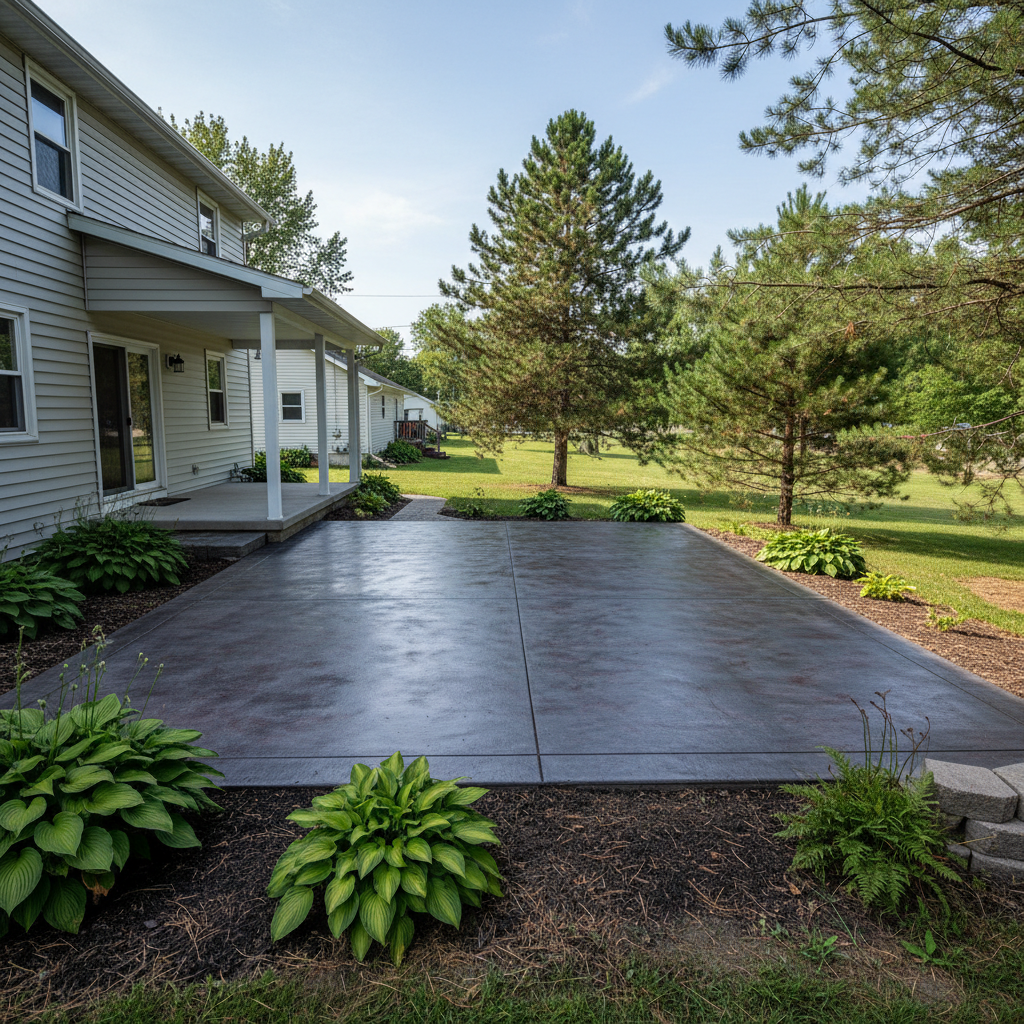
You got stained concrete, maybe a new patio, a basement floor, or that cool acid-stained garage. It looks fantastic, right? That rich color, the unique patterns – it's a real step up from plain gray. But here's the deal: even the toughest concrete needs a little love to keep it looking its best, especially with our Michigan weather. You want to protect that investment, and I'm here to tell you how.
Extending the Life of Your Stained Concrete
The biggest thing you can do to make your stained concrete last is protect the sealer. The stain itself is pretty permanent, it's actually changing the concrete's color. But the sealer is what keeps it vibrant, protects it from wear, and makes it easier to clean. Think of it like the clear coat on your car.
- Re-seal Regularly: This is probably the most crucial step. For outdoor concrete, especially patios and walkways that see a lot of foot traffic and our harsh Kingsford winters, you're probably looking at re-sealing every 2-3 years. Indoor concrete, like a basement floor that doesn't get UV exposure or heavy abuse, might go 5-7 years. It really depends on the type of sealer we used and how much wear and tear it gets. If you're not sure, give us a call at Premium Concrete Co, and we can tell you what we applied.
- Use the Right Cleaner: Don't just grab any old cleaner off the shelf. Harsh chemicals, especially those with acids or strong solvents, can strip your sealer right off. Stick to pH-neutral cleaners. A little dish soap and water often do the trick for indoor surfaces. For outdoor, a pressure washer on a low setting with a mild detergent is usually fine.
- Protect from Scratches: On indoor floors, use felt pads under furniture legs. Avoid dragging heavy items directly across the surface. Outside, if you're moving a grill or heavy planters, lift them, don't slide them.
- Address Spills Quickly: Especially for oil, grease, or anything acidic like fruit juice or vinegar. The longer it sits, the more likely it is to penetrate the sealer and potentially etch the concrete.
Regular Maintenance: What You Need to Do
This isn't rocket science, folks. It's mostly common sense, but it makes a huge difference.
- Sweep or Vacuum Regularly: For interior floors, this prevents grit and dirt from acting like sandpaper on your sealer. Outside, clear off leaves, dirt, and debris.
- Mop or Rinse: Indoors, a damp mop with a pH-neutral cleaner is generally all you need. Outdoors, a hose-down every now and then, especially after a dusty day or if you've had a BBQ, will keep things tidy.
- Winter Care: This is big for us up here. Try to avoid using rock salt or de-icers on your stained concrete, especially if it's a newer installation. Many de-icers can be corrosive to sealers and even the concrete itself over time. Sand is a much safer option for traction. If you must use a de-icer, look for calcium chloride-based products, but use them sparingly. And for Pete's sake, don't chip ice off with a metal shovel! Use a plastic one or a stiff broom.
Warning Signs of Problems
You're not just looking at it, you're living on it. So you'll notice when something's off.
- Dull Spots or Fading Color: This usually means your sealer is wearing thin. The color might look less vibrant, or you'll see areas that just don't shine like they used to. This is your cue to re-seal.
- Scratches or Scuffs: Minor surface scratches are often just in the sealer and can sometimes be buffed out or will disappear with a fresh coat of sealer. Deep scratches that go into the concrete itself are harder to fix perfectly, but a new sealer will help minimize their appearance.
- Peeling or Flaking Sealer: This is a sign that the sealer wasn't applied correctly, or it's been damaged by harsh chemicals or excessive moisture. You'll see bits of the clear coat lifting off the surface.
- Stains that Won't Come Out: If you've got a stain that's penetrated the sealer and is now in the concrete, it's a tougher fix. This usually means the sealer was compromised.
- Cracks: While staining won't prevent concrete from cracking (nothing truly will, concrete cracks, it's a fact of life), significant new cracks or existing cracks widening should be watched. These aren't usually a stain maintenance issue, but a structural one.
When to Call a Professional
Look, you don't have to be a concrete expert. That's my job. If you see any of those warning signs and you're not sure what to do, or if you just don't have the time or tools, give us a shout.
- For Re-sealing: If you want it done right, especially large areas or if you're unsure about the type of sealer to use, we can handle it. We've got the right equipment and experience.
- For Damage Repair: Peeling sealer, deep stains, or significant scratches are best handled by pros. We can often strip old sealer, clean the concrete, and re-seal to bring it back to life.
- For Cracks or Spalling: If your concrete is cracking badly or spalling (surface flaking off), that's beyond simple maintenance. We can assess the damage and recommend the best course of action.
Your stained concrete is a beautiful feature, and with a little care, it'll keep enhancing your home for years. Don't hesitate to reach out to Premium Concrete Co if you have questions or need a hand with any concrete work around Kingsford or the surrounding areas.