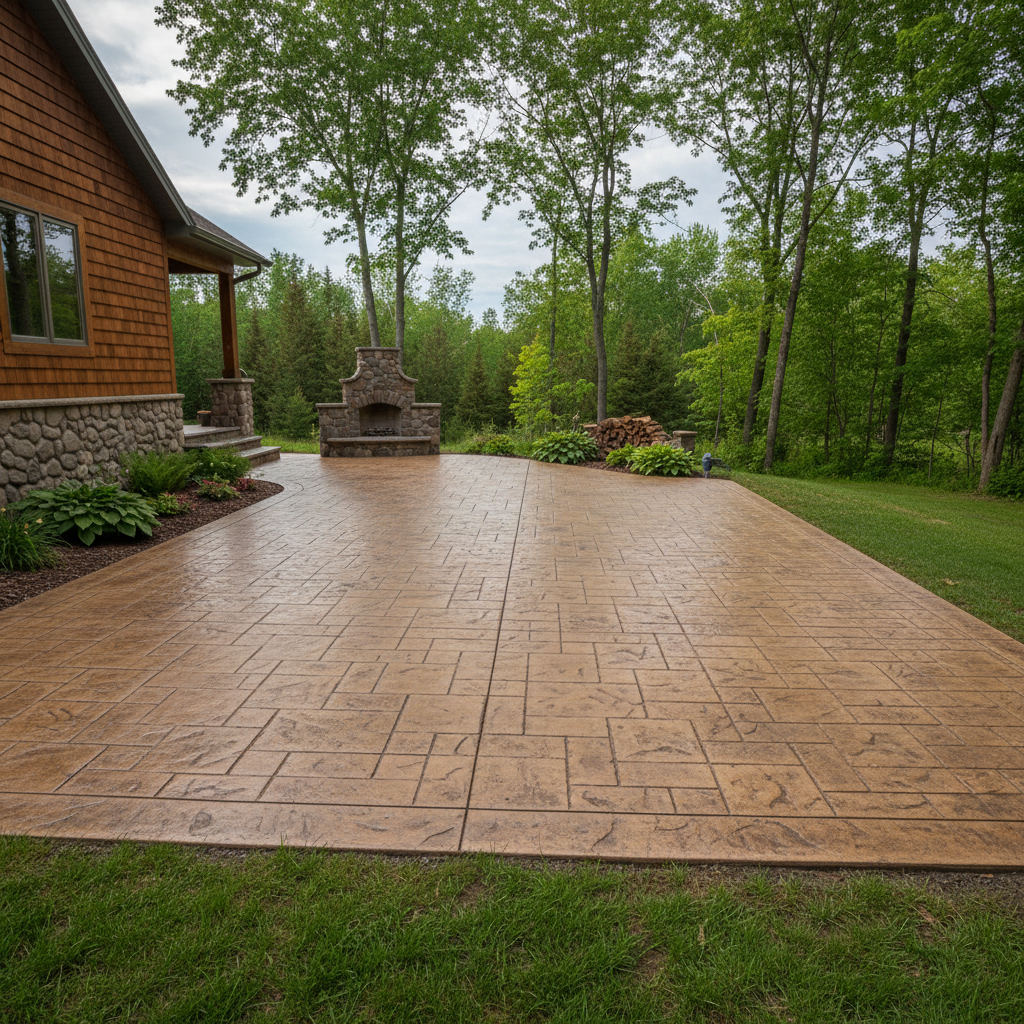
Stamping gives concrete an incredible look, mimicking slate, flagstone, or brick right there in your backyard. But if you live around Kingsford, you already know that our local weather does not cut any slack for decorative hardscapes. Between heavy snow loads, sub-zero winter stretches, and endless freeze-thaw cycles, your stamped concrete takes a beating every single year. Premium Concrete Co gets calls every spring from homeowners wondering why their decorative slab is starting to flake or lose its shine. Usually, it comes down to a skipped step in seasonal upkeep.
The Real Threat to Stamped Concrete Up North
Concrete is porous, which means it acts a bit like a hard sponge. When autumn rains or melting snow seep into the microscopic pores of your patio and the temperature plunges overnight, that trapped water freezes and expands. Multiply that by fifty times a winter, and you get surface scaling or spalling. On plain concrete, that is annoying. On stamped concrete, it ruins the color hardener, antique release, and the custom texture you paid good money for. Add in the rock salt and deicing chemicals we use to clear our driveways, and you have got a recipe for rapid surface degradation if you are not paying attention.
What Regular Maintenance Actually Looks Like
You do not need to spend every weekend babying your patio, but a little routine care goes a long way. Keeping the surface clean is step one. Sweep away leaves, pine needles from the local pines, and organic debris before they sit wet on the surface for weeks. When dirt and grit build up, use a mild, pH-neutral cleaner and a soft-bristle broom to wash it down. Avoid harsh acids or power-washing on high settings day after day, because blasting stamped concrete too aggressively can strip away the sealer and expose the raw aggregate underneath.
The big secret to extending the life of stamped concrete in Dickinson County is regular resealing. You will generally want to apply a fresh, breathable acrylic sealer every two to three years. Sealer acts as a raincoat. It blocks moisture from soaking into the concrete and stops deicing salts from eating away at the color. Timing matters here—pick a dry stretch in late summer or early fall when temperatures are mild, and make sure the surface is bone dry before rolling it on.
Warning Signs You Should Not Ignore
Keep your eyes open for changes in your concrete as the seasons shift from winter freezes to summer humidity. Watch out for these common red flags:
- Fading or dull patches where the sheen has completely worn off, leaving the color looking chalky
- Hairline cracks starting to spiderweb across high-traffic zones
- Flaking or peeling layers of clear coat, which often happens when moisture gets trapped under a cheap sealer
- White, powdery residue known as efflorescence pushing through the surface
If you catch these early, they are usually an easy fix. Ignore them through a brutal winter, and minor cosmetic wear turns into deep structural cracking.
When It Is Time to Call a Professional
Some chores are great for a Saturday afternoon, but certain problems require a heavy hand and actual trade experience. If you notice a slab starting to sink or lift due to frost heave, or if cracks are opening up wider than a credit card, stop trying to patch it with hardware store caulk. At that point, you need a professional set of eyes to evaluate the sub-base drainage and decide whether mudjacking, slab replacement, or a specialized overlay is required. Taking care of your decorative concrete early keeps your Kingsford property looking sharp year-round without forcing you into an early replacement bill.